
Built for RV service departments

Keep Every RV Repair Organized From Inspection to Completion

ServiceOS ties RV technicians, work orders, warranty documentation, and customer communication into one coach record. Every inspection finding, part photo, and repair step lands against the unit, so service managers can track long warranty jobs and owners can see exactly where their coach stands.

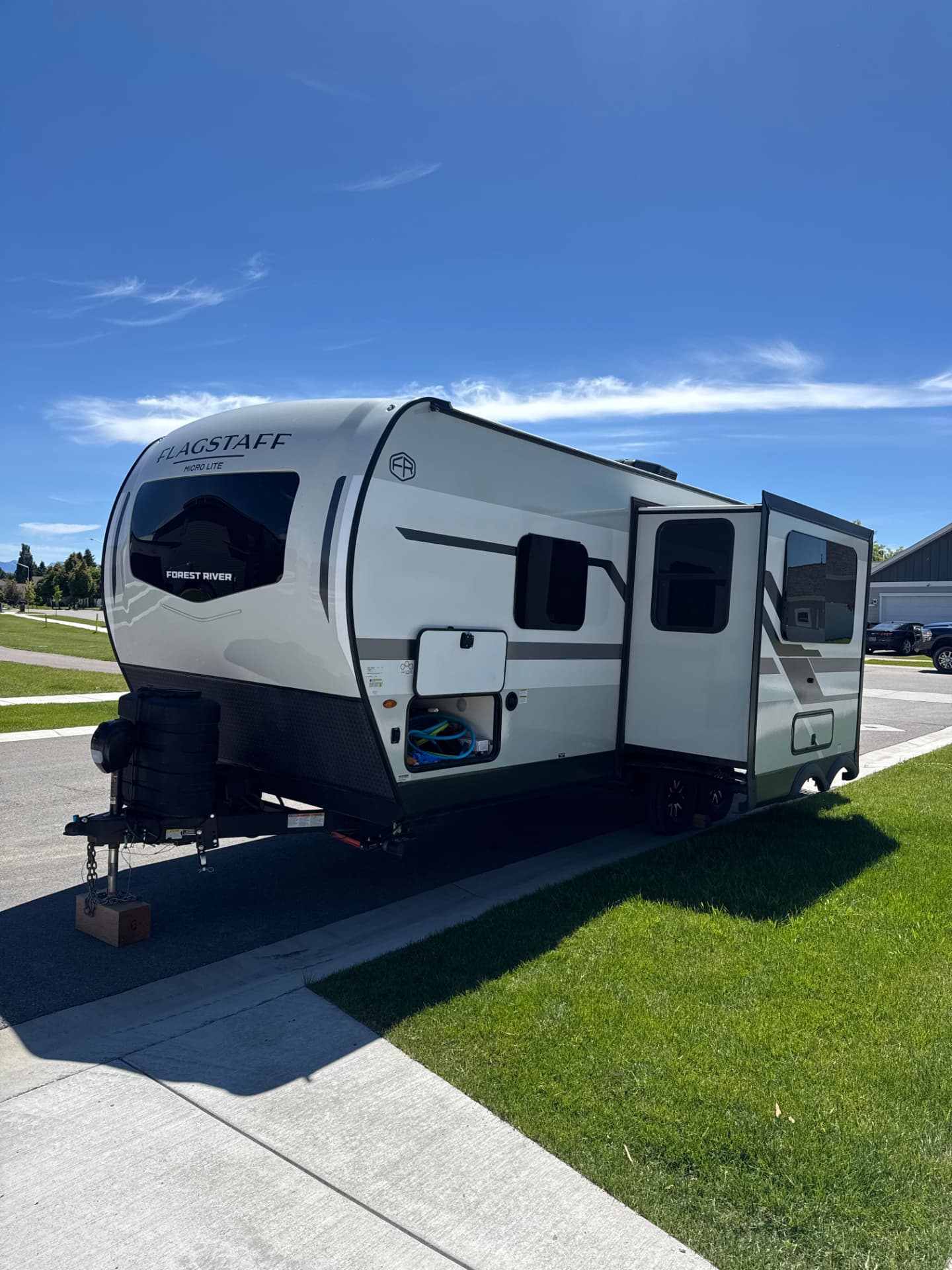
Travel trailer parked ahead of an RV service appointment
RV dealerships and service centers

Service Work Happens Everywhere. The Record Shouldn't.

An RV is not one machine. It is a vehicle wrapped around a house, and a single repair order can touch chassis, slide-outs, plumbing, electrical, propane, appliances, and cosmetic work — each with its own manufacturer and its own warranty process.

Those large scopes are why units sit. Diagnosis happens in stages, parts arrive in waves, and every stage needs documentation for a different warranty administrator. Photos are the backbone of every claim and usually the weakest link.

Owners feel the delay more than any other service customer, because their coach is often their vacation, their travel plan, or their home.

  • Large multi-stage repair scopes
  • Many systems inside one unit
  • Warranty documentation across multiple manufacturers
  • Slide-out, plumbing, electrical, and appliance repairs
  • Repair photos required for claims
  • Keeping owners informed during long jobs
How ServiceOS helps

One record for the work, built while the work gets done.

Document Work as It Happens

Capture service photos, video, notes, and work documentation while technicians perform the job — not hours later from memory.

Organize Everything Around the Work

Every file stays connected to the right repair order, job, asset, and work step, so nothing has to be sorted by hand.

Create a Permanent Service Record

Build an organized history of work instead of leaving evidence scattered across phones, messages, folders, and paper.

Give Managers Visibility

Service managers review work documentation and supporting media without constantly interrupting technicians.

Capture Hands-Free

Where supported, wearable technology lets technicians document work without reaching for a phone mid-job.

Turn Service Activity Into Useful Information

AI-assisted workflows help organize and summarize service documentation so the record is easy to review and share.

RV dealerships and service centers

RV service has a waiting problem, not just a documentation problem

RV service departments hold units for weeks, sometimes months, and the majority of that time is spent waiting — on a manufacturer's warranty authorization, on a part from a component supplier, on a second diagnosis. Owners do not experience that as complexity. They experience it as silence.

The underlying issue is that nobody can see the job. The technician knows what is happening. The warranty administrator knows what was submitted. The service advisor knows what the customer was last told. Those three pictures rarely match, and reassembling them takes a phone call chain every time an owner asks for a status.

Documentation gaps make it worse. A warranty claim submitted without adequate photo evidence gets kicked back, and the coach sits for another two weeks while the tech reshoots something they already looked at.

One coach record from intake to delivery

ServiceOS gives every unit a permanent record by VIN and chassis, with a documentation timeline for each work order. Intake starts with a guided walkaround — roof, seals, slide-outs, sidewalls, undercarriage — captured with photos so pre-existing condition is on record before the coach enters the shop.

From there, techs work guided checklists by system: appliance, plumbing, LP, electrical, slide-out mechanism, chassis. Each finding gets photographed or filmed against its step, with a voice note where the picture is not self-explanatory. Because RV work spans so many trades, the structure matters — it is what keeps a multi-week job legible when three different techs touch it.

Every capture is timestamped and attributed, so a job that changes hands never loses continuity.

  • Unit records by VIN and chassis with full service history
  • Guided intake walkaround documenting pre-existing condition
  • System-by-system checklists for appliance, LP, electrical, and slide-out work
  • Continuity across technicians on long multi-week jobs

Warranty claims that survive the first submission

RV warranty is split across the coach manufacturer and a long list of component suppliers, each with its own evidence standard. Claims that arrive without clear photos, part numbers, and a coherent failure narrative come back, and every return costs the department bay space and the customer goodwill.

ServiceOS assembles the claim package as the work happens: serial and model plates, the failed component in place, the failure condition, and the technician's narrative in sequence. Administrators submit from a complete file instead of chasing a technician who has moved on to another unit.

Approval turnaround improves, and so does the department's authorization rate on borderline claims — because borderline claims are usually just under-documented ones.

Keeping owners informed without the phone tag

The fastest way to reduce status calls is to make status visible. ServiceOS lets advisors share a running record with the owner — what has been inspected, what was found, what is on order, and what is waiting on authorization — with the actual photos attached.

Owners who can see progress tolerate delay far better than owners who cannot, and advisors get their day back. It also cuts disputes at delivery, because the owner has been looking at the same evidence the shop has all along.

  • Shareable owner-facing job status with photos and findings
  • Clear separation between shop time and waiting-on-warranty time
  • Delivery packages that document everything performed

What the service manager gains

A live board shows every unit on the lot and in the shop, its stage, its owner, and what is blocking it. That turns the weekly what-is-holding-up-this-coach meeting into something a manager can answer at a glance.

It also exposes patterns worth acting on: which component suppliers reject claims most often, which models generate the same failure repeatedly, and how much of the department's calendar is genuinely waiting versus idle. That is the data that lets a manager argue for staffing, negotiate with a supplier, or change how the store quotes turnaround.

Common questions

Can we document a coach across multiple technicians and weeks?
Yes. The record belongs to the unit, not the tech, so the job stays continuous no matter who touches it.
Does it help with component supplier warranty specifically?
Yes. Capture is structured so serial plates, failure condition, and narrative are all in the package before submission.
Can owners see status without calling?
Advisors can share a live job record with photos and current stage.
Do we need new hardware?
No. Phones and tablets work today; AR glasses are optional for hands-free capture in tight spaces like slide-out mechanisms and undercarriage work.

Give every coach a record its owner can follow.

See how RV dealerships use ServiceOS to document intake, speed warranty approvals, and keep owners informed.