
Built for plant maintenance

Turn Maintenance Work Into a Permanent Digital Record

ServiceOS connects maintenance technicians, work orders, asset history, and plant management in one system. PMs, corrective work, and line-down repairs are captured with photo and video evidence at the asset, so operations managers can see status live and reliability teams can finally see why equipment keeps failing.

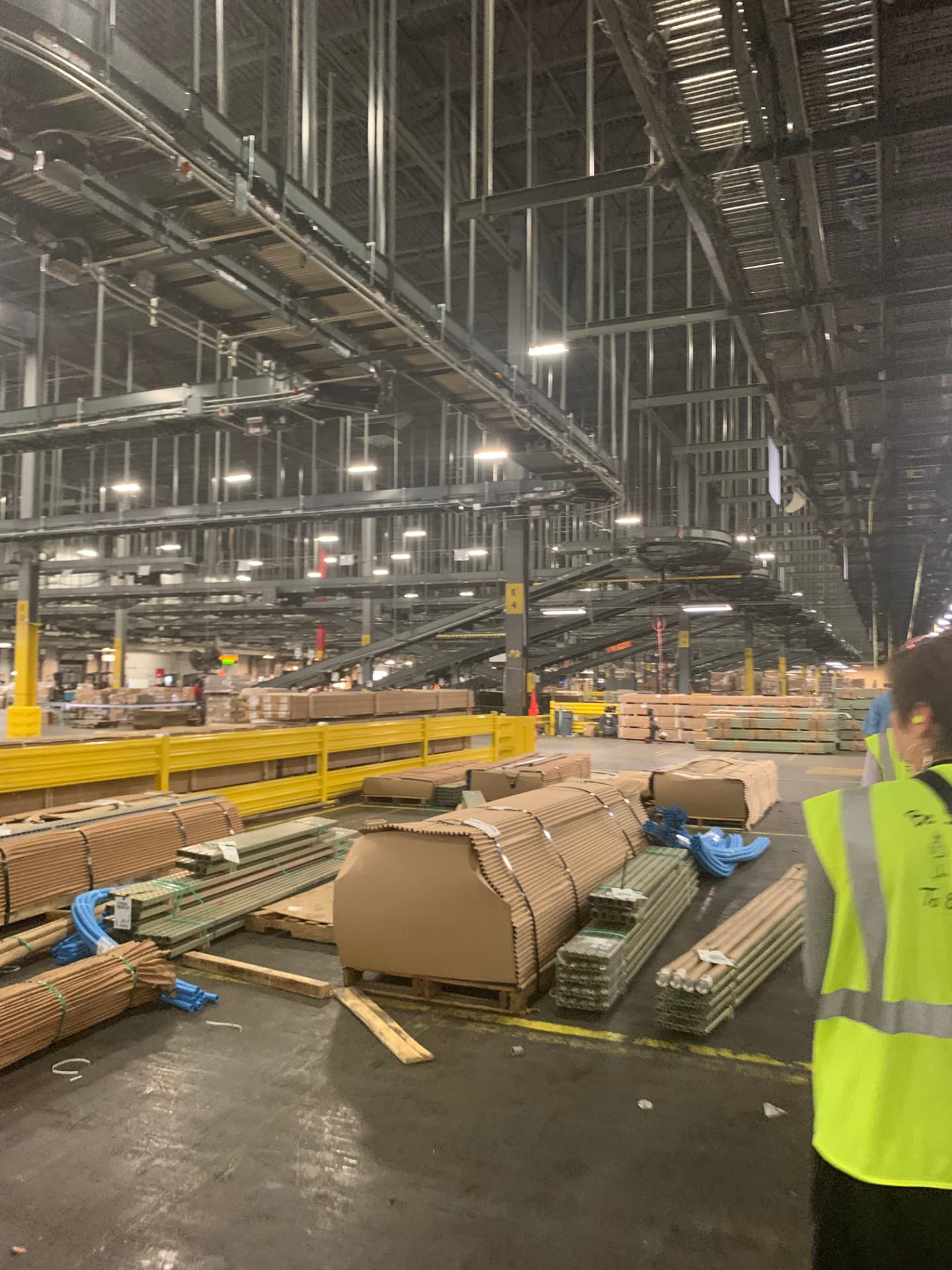
Industrial warehouse floor with materials and conveyor systems
Industrial and plant maintenance

Service Work Happens Everywhere. The Record Shouldn't.

Maintenance work in a plant happens everywhere at once — across lines, mezzanines, roofs, and confined spaces, on three shifts, by teams that hand work off mid-repair.

Downtime is the cost that matters, and downtime response is where documentation collapses. The tech who takes a line down at two in the morning is not writing a report; they are getting production running. What they saw and what they changed stays with them.

Six weeks later the same asset fails, a different technician starts from nothing, and the maintenance history says replaced bearing.

  • Maintenance teams spread across large facilities
  • Equipment downtime response under pressure
  • Shift changes and mid-repair handoff
  • Repair documentation written after the fact, if at all
  • Inspection evidence for audits
  • Asset maintenance history that lacks detail
How ServiceOS helps

One record for the work, built while the work gets done.

Document Work as It Happens

Capture service photos, video, notes, and work documentation while technicians perform the job — not hours later from memory.

Organize Everything Around the Work

Every file stays connected to the right repair order, job, asset, and work step, so nothing has to be sorted by hand.

Create a Permanent Service Record

Build an organized history of work instead of leaving evidence scattered across phones, messages, folders, and paper.

Give Managers Visibility

Service managers review work documentation and supporting media without constantly interrupting technicians.

Capture Hands-Free

Where supported, wearable technology lets technicians document work without reaching for a phone mid-job.

Turn Service Activity Into Useful Information

AI-assisted workflows help organize and summarize service documentation so the record is easy to review and share.

Industrial and plant maintenance

Maintenance knowledge lives in people, not systems

Most plants have a CMMS. Very few have a usable record of what actually happened during a repair. The work order closes with a line like replaced bearing, and everything that mattered — the wear pattern, the misalignment that caused it, the temporary fix on the guard, the setting someone changed at three in the morning — stays in the technician's head.

That gap shows up on the next failure. The night-shift tech who takes the same line down six weeks later starts from zero, because there is nothing to read except a closed ticket. It shows up again in reliability meetings, where root-cause analysis depends on recollection rather than evidence.

And it shows up hardest when experienced maintenance techs retire. In many plants the majority of practical troubleshooting knowledge is undocumented and about a decade from walking out the door.

How ServiceOS documents plant maintenance

Every asset carries a permanent record — equipment ID, location, line, and full maintenance history. Work orders open against that asset and load the right guided procedure, whether it is a scheduled PM, a lubrication route, a changeover, or an emergency corrective repair.

Technicians capture as they work. A photo of the failed bearing race, a clip of the vibration before shutdown, a voice note about the coupling alignment they corrected. Hands-free capture matters here more than almost anywhere else, because plant techs are usually gloved, elevated, or working in a confined space.

Everything attaches to the asset and the work order automatically, with technician, shift, and timestamp. Nothing depends on someone writing a summary after the fact.

  • Asset records by equipment ID, line, and location
  • Guided PM, lubrication, changeover, and corrective procedures
  • Hands-free capture for gloved, elevated, and confined-space work
  • Shift-to-shift handoff with evidence, not just notes

Line-down response and shift handoff

When a line goes down, minutes are money and communication is chaos. ServiceOS lets the responding tech document and broadcast at the same time: the supervisor, the reliability engineer, and if needed the OEM rep can all see what the tech sees without walking to the floor.

The same record solves handoff. A repair that spans shifts hands over with the actual condition attached, so the incoming tech does not disassemble something twice to see what the last shift already saw. Over a year, that alone recovers a meaningful amount of downtime.

Reliability analysis with real evidence

Reliability programs are only as good as their failure data. When every corrective work order carries dated photo evidence of the failure mode, root-cause analysis stops being a debate about what people remember. Recurring failures become visible by asset, by component, by line, and by shift.

That evidence also strengthens the case for capital. A request to replace a chronically failing piece of equipment lands very differently when it comes with a documented failure history instead of a maintenance manager's assertion.

For contracted and OEM-performed work, the record holds vendors to the same standard as internal techs.

  • Failure-mode evidence attached to every corrective work order
  • Recurring failure visibility by asset, component, line, and shift
  • Documented history to support capital requests and vendor accountability

Compliance, safety, and training

Regulated environments require proof that procedures were followed. Because ServiceOS captures each step as it is completed, compliance documentation is generated by the work rather than added to it, and audits become a search instead of a scramble.

The same library becomes the plant's training material. New maintenance techs learn from recordings of real repairs on the equipment they will actually be responsible for, narrated by the people who know it best. That is the most direct way to preserve institutional knowledge before it retires.

Common questions

Does ServiceOS replace our CMMS?
No. It adds the documentation and media layer your CMMS lacks, and completed records export back into it.
Can it be used in confined spaces and elevated work?
Yes — hands-free capture is specifically aimed at work where a technician cannot hold a phone.
What about restricted-camera areas?
Capture can be scoped by area and role so documentation policy matches plant policy.
How does this help with an aging workforce?
Recorded jobs turn senior technician expertise into a searchable library the next generation can learn from.

Make every repair something the next shift can read.

See how plant maintenance teams use ServiceOS to document work, cut downtime, and preserve technician knowledge.