
VizAi Tech
Built for the boatshop

Service Documentation Software Built for Marine Service Departments

ServiceOS connects your technicians, work orders, and service media in one vessel record. Techs capture photos, video, and voice notes hands-free while they work; the platform files everything against the right hull, engine, and repair order so service managers, writers, and owners all see the same story without chasing anyone down.

The hardware

On the tech. Wear the tech.

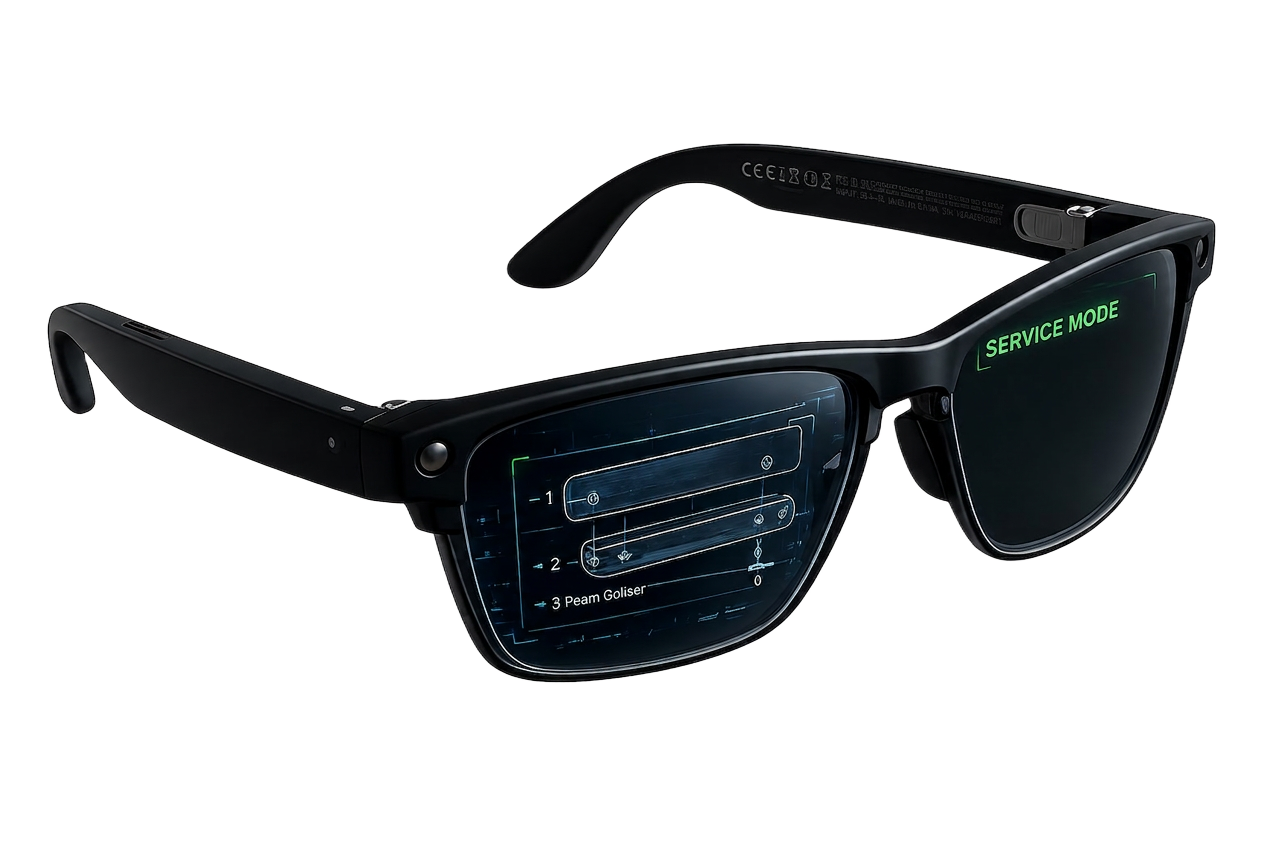
Lightweight AR glasses by Meta keep the tech's hands on the engine while the Gen 2 heads-up display surfaces fluid specs, torque values, and step-by-step checklists — all driven by what they're looking at.

VizAi AR smart glasses for marine service
What the tech sees

POV — Manifold drain plug location

Step-by-step de-winterization guidance: locate the manifold drain plug, confirm flow, and check off each task hands-free.

REC · POV-01
HULL M-2847|SPRING COMM
Mercruiser 4.3L
Coolant OK
Block temp · 62°F
DRAIN PLUG
Port manifold · 3/8" NPT
Task · De-winterize
Inspect hoses
Open seacock
Locate drain plug
Confirm flow
Start engine
BATT 78%
09:42:11
SLIP 14 · SHOP
Use cases

Every Vessel. Every Season. Every Service.

From spring commissioning to winter layup — capture once, share everywhere.

Winterization checks

Antifreeze, fogging oil, and battery storage — step-by-step through the glasses.

De-winterization flow

Locate every drain plug, confirm coolant circulation, and flag blockages from POV.

Fluid & filter service

Oil, fuel, and water separator changes with torque specs in view.

Leak detection

Flag seepage at the manifold, riser, or bellows and narrate exact location.

Seasonal photo packs

Walk the bilge, engine bay, and drivetrain — every checkpoint hands-free.

Service history

Time-stamped photo + video evidence attached to every vessel record.

Platform

ServiceOS, Tuned For Marine

The same VizAi platform that runs fleet, aviation, and auto service — reframed for boatshops, marinas, and marine dealerships.

Vessel & engine records

Organize by hull ID, engine serial, and service season.

Shop roles

Service manager, lead tech, rigger, and detailer — each with the right access.

Live POV streaming

Loop in the shop manager or manufacturer rep from anywhere.

Auto-tagged tasks

Voice and gesture tag work as complete, blocked, or needs review.

Seasonal compliance

NMMA-ready documentation packages exported in one click.

Owner-ready reports

Seasonal logs, warranty packets, and closeout binders — generated for you.

Marine service departments

Service Work Happens Everywhere. The Record Shouldn't.

Marine technicians do not work at a desk. They move between boats in the water, units on trailers, and bays in the shop, often touching several vessels in a single day. The documentation follows whoever happened to be holding a phone.

Repair orders in this industry are rarely simple. A single job can span engines, drives, electrical, plumbing, canvas, and cosmetic work, with customer authorization needed partway through and a warranty claim waiting at the end. PDI and seasonal service add another layer of paperwork that has to be produced months later, on request, by someone who was not there.

When the evidence is spread across personal phones, text threads, and paper tickets, proving the work was completed becomes its own job.

  • Techs moving between boats, trailers, and service bays
  • Repair photos scattered across personal phones
  • Complex multi-system repair orders
  • PDI documentation that has to be produced later
  • Warranty documentation and claim evidence
  • Seasonal winterization and commissioning records
  • Customer repair authorization mid-job
  • Proving work was completed as billed
How ServiceOS helps

One record for the work, built while the work gets done.

Document Work as It Happens

Capture service photos, video, notes, and work documentation while technicians perform the job — not hours later from memory.

Organize Everything Around the Work

Every file stays connected to the right repair order, job, asset, and work step, so nothing has to be sorted by hand.

Create a Permanent Service Record

Build an organized history of work instead of leaving evidence scattered across phones, messages, folders, and paper.

Give Managers Visibility

Service managers review work documentation and supporting media without constantly interrupting technicians.

Capture Hands-Free

Where supported, wearable technology lets technicians document work without reaching for a phone mid-job.

Turn Service Activity Into Useful Information

AI-assisted workflows help organize and summarize service documentation so the record is easy to review and share.

Marine service departments

Why marine service documentation breaks down

A marine service department runs on seasonality. Spring commissioning, mid-season repairs, warranty work, and fall layup all hit in compressed windows, and the same technician may touch a dozen vessels in a week. The work itself is rarely the problem. The problem is proof: which drain plug was pulled, what the impeller looked like before it was replaced, whether the gelcoat damage was there at drop-off, and who signed off on the sea trial.

Most shops solve this with phones. A technician snaps photos, texts them to the service writer, and hopes someone attaches them to the repair order. Those photos live in a camera roll organized by date, not by hull ID. When a warranty claim arrives four months later, or an owner disputes a charge, the department spends hours reconstructing a job that was documented perfectly well — just nowhere findable.

The cost is not only administrative. Undocumented work is unbillable work. Techs who cannot show the corrosion they found do not get approval for the additional labor, and the shop absorbs the difference. Multiply that across a season and documentation gaps become one of the largest silent margin leaks in the department.

How ServiceOS works in a boatshop

ServiceOS starts at the repair order. Every vessel in your system carries a permanent record keyed to hull ID, engine serial, and owner, and each new work order opens a documentation timeline underneath it. When a technician begins a job, they open that work order on a phone, tablet, or AR glasses and the checklist for that service type is already loaded.

Capture happens in the flow of work rather than after it. A tech running a de-winterization can call out a step, take a photo of the manifold drain plug, and record a ten-second clip of coolant flow without setting down a tool. Each capture is timestamped, attached to the specific checklist step, and tagged with the technician who took it.

By the time the tech closes the work order, the documentation is already complete. Nobody re-types notes at the end of the day, nobody airdrops photos to the service desk, and nothing waits on a writer to sort it.

  • Vessel records organized by hull ID, engine serial, and service season
  • Guided checklists for winterization, de-winterization, and routine PM
  • Photo, video, and voice capture attached to the exact checklist step
  • Automatic technician, time, and location stamping on every file

Visibility for the service manager

Service managers spend a surprising share of the day answering the same question: where is that boat? ServiceOS answers it without a walk through the shop. A live board shows every open work order, which technician owns it, which steps are complete, and which are flagged as blocked or waiting on parts.

When something needs a second opinion, the manager can review the tech's captured media instead of walking out to the slip. Approval conversations that used to take a phone tag cycle become a glance at a photo. For dealerships running multiple locations, the same board rolls up across stores so a service director can see throughput by shop, by tech, and by job type.

That visibility also feeds scheduling. Once you can see how long a spring commissioning actually takes for a given engine family, the department can quote realistic turnaround times instead of optimistic ones.

Warranty, compliance, and owner-facing records

Manufacturers want evidence. So do insurers, and so do owners deciding whether a bill is fair. ServiceOS assembles a closeout package for any completed job — the checklist, every photo and clip in sequence, technician notes, parts, and labor — and exports it as a single shareable record.

For warranty submissions, that means claim documentation is built as a byproduct of doing the work rather than a task someone performs at month end. For owners, a clear before-and-after record is the fastest way to end a dispute before it becomes one, and it consistently improves approval rates on recommended additional work.

Records persist for the life of the vessel. When a boat comes back three seasons later, or arrives at a different store in the group, the full service history comes with it.

  • One-click closeout packages for warranty and insurance submissions
  • Owner-ready summaries with before and after media
  • Permanent service history that follows the hull, not the technician

Training the next generation of marine techs

The marine trade is losing experienced technicians faster than it is replacing them. When a twenty-year tech retires, their diagnostic instinct usually leaves with them. Because ServiceOS records real jobs from the technician's own point of view, that knowledge stays in the building.

Shops use captured jobs as training material: a first-year tech can watch exactly how a lead handled a stubborn riser or a fuel system issue on the same engine family they are about to work on. Onboarding time drops, and supervision load drops with it, because a lead can review a junior's captured work asynchronously instead of standing over them.

Common questions

Do technicians need AR glasses to use ServiceOS?
No. ServiceOS works on any phone or tablet your techs already carry. Glasses add hands-free capture, which matters most in tight engine bays, but they are optional.
Will this work with our existing DMS or shop management system?
ServiceOS is designed to sit alongside your existing system of record. Work orders and vessel identifiers sync in, and completed documentation packages export out.
What happens in a marina with poor connectivity?
Capture works offline. Media is stored locally on the device and uploads automatically once the tech is back in coverage.
How long does it take to roll out to a shop?
Depending on the number of service managers, service writers, and technicians, the usual initial setup is measured in a couple of days.

Give every vessel a permanent service record.

See how marine service departments use ServiceOS to document every job, defend every claim, and close out faster.